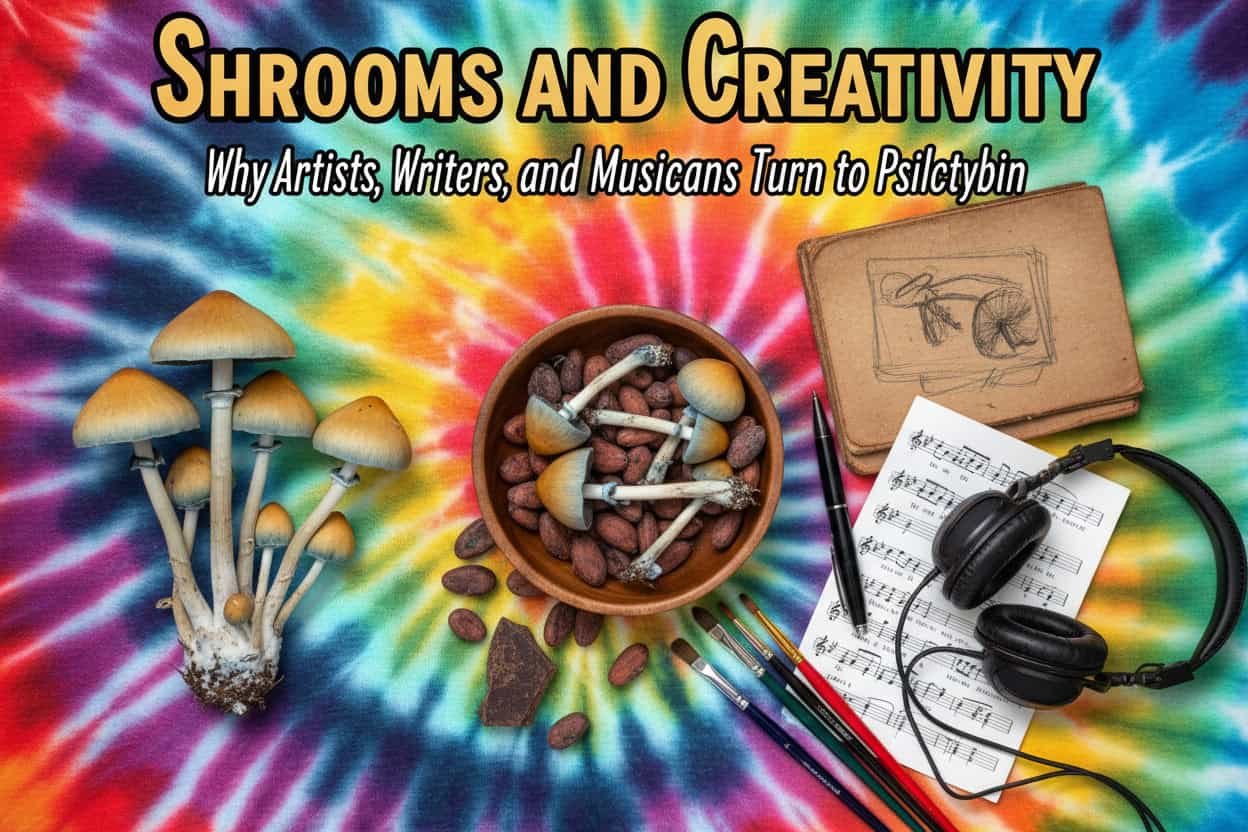
Creative people have long been drawn to altered states as a way to loosen rigid thinking and access fresh ideas. From ancient ceremonial use to contemporary art studios, psilocybin-containing mushrooms continue to be discussed as tools that may encourage imagination, emotional openness, and novel perspectives. Today, this curiosity is increasingly informed by neuroscience, cultural history, and a growing emphasis on responsible, harm-reduction-minded exploration.
The neuroscience behind creativity and psilocybin
Modern brain imaging research suggests that psilocybin temporarily changes how different regions of the brain communicate. In particular, it reduces the dominance of tightly controlled networks associated with habitual thinking, allowing less-connected regions to exchange information more freely. This shift is often linked to cognitive flexibility, pattern recognition, and the ability to form unexpected associations.
Interestingly, studies indicate that while focused, task-based problem solving may dip during an acute experience, many people report a noticeable increase in original ideas and insight in the days that follow. This post-experience “afterglow” appears to support reflective creativity rather than forced productivity.
Historical and contemporary creative influences
Long before laboratory studies existed, Indigenous cultures in Mesoamerica treated mushrooms as sacred tools for vision, storytelling, and symbolic art. Carved stones, murals, and oral traditions suggest these experiences were closely tied to creative and spiritual expression rather than recreation.
In the modern era, musicians, visual artists, and writers have described how psychedelic experiences helped them revisit their work with renewed curiosity. Rather than supplying ideas outright, the value often comes from emotional reframing, reduced self-criticism, and a greater willingness to experiment.
Microdosing and everyday creative flow
Microdosing refers to taking very small, sub-perceptual amounts of psilocybin on an infrequent schedule. Many people explore this approach in hopes of subtle mood support, improved focus, or a smoother creative rhythm without intense psychedelic effects.
Those interested in structured formats often look to options such as microdose capsules, which are designed for consistency and ease of measurement. It is important to note that scientific evidence on microdosing remains mixed, and expectations should stay grounded.
Creative formats and intentional use
Different creative goals may call for different approaches. Some artists prefer reflective journaling or sketching after an experience, while others focus on sensory inspiration such as music or visual design. Edible formats, including products like shroom chocolate, are sometimes chosen for their familiar form and slower onset, which can encourage a more deliberate, intentional pace.
Regardless of format, intention-setting and integration remain central. Writing down insights, revisiting unfinished projects, and allowing time for rest can help translate abstract experiences into practical creative output.
Access, environment, and regional context
Setting plays a major role in shaping any introspective or creative experience. Urban creatives often emphasize quiet, controlled environments that contrast with the pace of city life. In areas such as Toronto, Mississauga, and Vaughan, discussions around mindful use frequently highlight privacy, preparation, and understanding local regulations.
Staying informed about regional laws and prioritizing safety helps ensure that curiosity about creativity does not turn into unnecessary risk.
Safety, balance, and creative responsibility
Psilocybin is not a shortcut to artistic skill, nor is it suitable for everyone. Acute effects can temporarily impair judgment, and individuals with certain mental health conditions should be especially cautious. Creative exploration is best approached gradually, with attention to mental well-being and personal boundaries.
Combining education, intention, and respect for the substance allows creativity to unfold naturally rather than being forced. For many, the real value lies not in the experience itself but in how insights are integrated afterward.
Further reading and external perspectives
 Discreet shipping across Canada
 Same-day GTA delivery · free over $129
 Rated 4.8+ out of 5 by our customers
 Free gift on every $60+ order