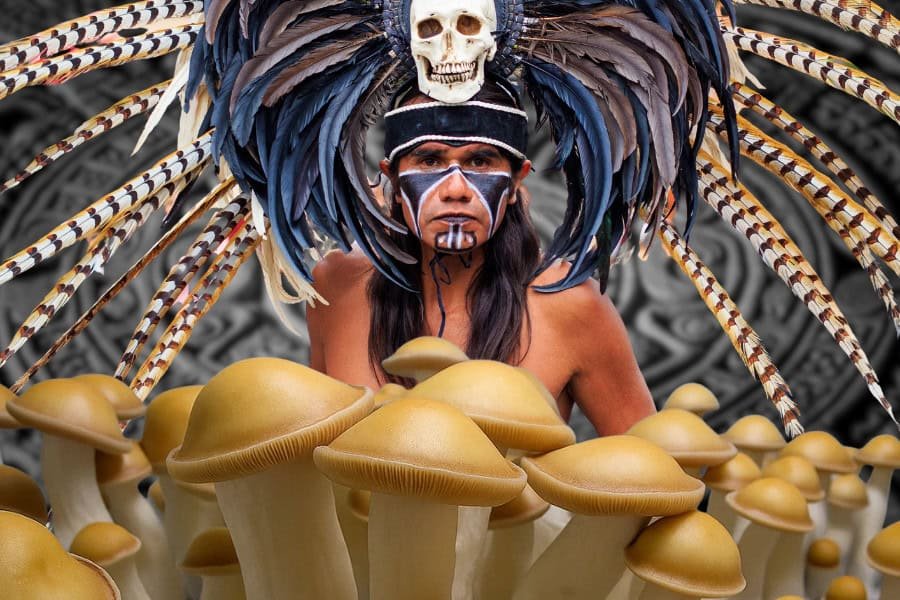
For thousands of years, psilocybin mushrooms have held a central place in the spiritual and healing traditions of many Indigenous cultures. These mushrooms were not viewed as ordinary plants, but as sacred allies believed to open pathways to wisdom, healing, and communication with the spiritual world. Looking at how ancient societies worked with psilocybin helps clarify its cultural meaning and offers valuable perspective as interest grows in its modern use.
Origins of psilocybin use in Indigenous cultures
The ceremonial use of psilocybin mushrooms stretches back thousands of years, particularly in Mesoamerica among the Aztec, Maya, and Mazatec peoples. In Nahuatl, the mushrooms were known as teonanácatl, meaning “flesh of the gods,” reflecting their sacred role in religious life. Archaeological evidence, including stone carvings and ceremonial artifacts, suggests these practices were established well before 1500 BCE and likely passed down through oral tradition even earlier.
Outside of Mesoamerica, psychoactive mushrooms also appeared in other regions. In Siberia, for example, Indigenous groups such as the Chukchi used visionary mushrooms in shamanic rituals. While documentation is more limited, traces of mushroom-based spiritual practices have also been suggested in parts of Africa and Europe where suitable species grew naturally. Across cultures, these fungi were respected as tools for accessing non-ordinary states of awareness.
Ancient evidence and written records
Archaeological findings offer clues to humanity’s long relationship with psychedelics. Cave paintings in the Tassili n’Ajjer region of Algeria, dated to roughly 6000 BCE, depict figures holding mushroom-like shapes, suggesting ritual use. In Central America, ceremonial objects and carvings further support the role of mushrooms in spiritual gatherings.
Written traditions echo these findings. The Rigveda describes a mysterious sacramental drink called Soma, widely believed to have psychoactive properties. In ancient Greece, participants in the Eleusinian Mysteries consumed a ritual beverage known as kykeon, thought by some scholars to have induced altered states of consciousness. Together, these accounts point to a widespread, cross-cultural tradition of using mind-altering substances for spiritual insight.
The role of psilocybin in spiritual and healing practices
Psilocybin’s ability to alter perception and emotion made it a cornerstone of spiritual and healing work. Shamans and healers used these experiences to seek guidance, communicate with ancestors, and restore balance within individuals and communities. The visions and emotional depth produced by psilocybin were understood as meaningful messages rather than random hallucinations.
Psilocybin as a tool for divination
Divination was one of the primary ceremonial uses of psilocybin. Among the Mazatec, nighttime ceremonies guided by a healer were used to seek answers to communal or personal questions. Participants interpreted visions to understand illness, conflict, or future events. Chanting, prayer, and darkness were used to support focus and introspection, reinforcing the sacred nature of the ritual.
Healing and medicine in ancient traditions
Psilocybin was also used as a form of medicine, addressing physical, emotional, and spiritual concerns together. Healers believed illness often stemmed from imbalance or unresolved emotional conflict. Through guided ceremonies, participants confronted inner distress and gained insight into its origins. This holistic approach shares similarities with modern therapeutic interest in psilocybin for emotional well-being.
Ritual structure and ceremonial context
Rituals involving psilocybin were carefully structured and guided. Preparation often included fasting, purification, and setting clear intentions. Mushrooms were consumed in controlled environments such as temples, homes, or natural spaces considered spiritually significant. Music, chanting, and offerings were commonly used to shape the experience.
Community played a central role. Ceremonies emphasized shared understanding and collective healing rather than individual experimentation. This communal framework reinforced respect for the mushrooms and limited misuse.
Archaeological and anthropological insight
Physical evidence of mushroom rituals includes Mesoamerican “mushroom stones” dating from 1000 to 500 BCE, as well as colonial-era accounts describing ceremonial use before Spanish suppression. In the twentieth century, ethnographic research helped preserve surviving traditions, particularly among the Mazatec, where ceremonial use continued quietly despite outside pressure.
These accounts demonstrate that psilocybin use was never casual. It was embedded in systems of ethics, responsibility, and cultural meaning that shaped how the experience was understood and integrated.
Modern reflection and access
Today, many people are rediscovering psilocybin through a modern lens, often seeking personal growth rather than formal ceremony. In cities such as Toronto, Vancouver, and Montreal, conversations around harm reduction and education emphasize learning from Indigenous traditions rather than ignoring them.
Those exploring contemporary formats may encounter options such as dried mushrooms or measured products available through the magic mushrooms category. Others prefer more controlled approaches, including pre-measured options found in microdose capsule formats, which reflect a modern attempt to balance accessibility with consistency.
 Discreet shipping across Canada
 Same-day GTA delivery · free over $129
 Rated 4.8+ out of 5 by our customers
 Free gift on every $60+ order