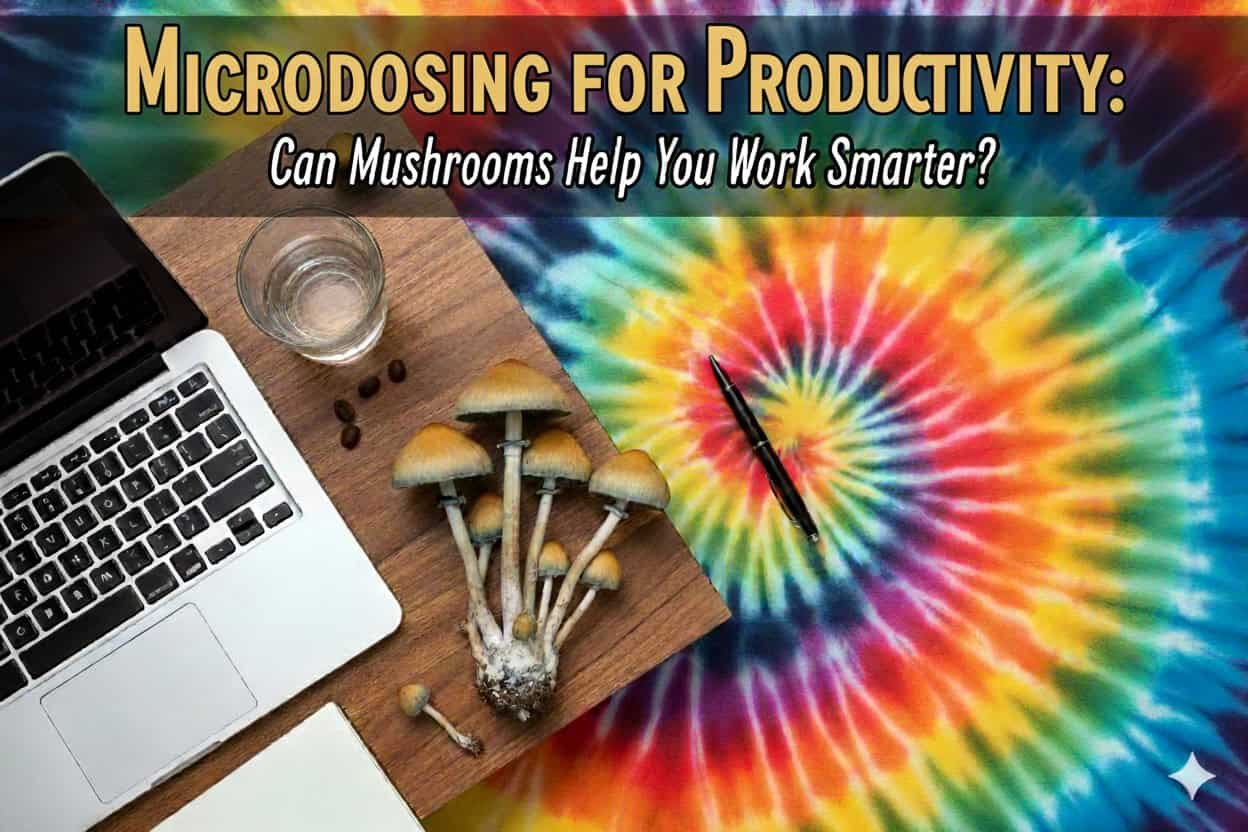
In a fast-paced, always-on world, productivity has become a major focus for students, creatives, and professionals alike. Many people are searching for sustainable ways to improve focus, manage stress, and stay mentally flexible without burning out. One approach that has gained attention in recent years is microdosing psilocybin mushrooms. Rather than producing a full psychedelic experience, microdosing is often described as a way to support clarity, motivation, and creative flow while staying grounded in daily responsibilities.
What microdosing means in practice
Microdosing involves taking very small, sub-perceptual amounts of psilocybin, the naturally occurring compound found in certain mushrooms. These doses are intentionally low enough that they do not cause hallucinations or noticeable intoxication. Instead, people report subtle shifts in attention, mood, and perspective that can blend seamlessly into everyday life.
A typical microdose is often described as a fraction of a standard recreational amount. The goal is not to escape reality, but to engage with work and responsibilities in a more focused and balanced way. Many people incorporate microdosing into structured routines, spacing doses out to avoid tolerance and to better observe how it affects their productivity.
How microdosing may support productivity
Scientific research on microdosing is still emerging, but anecdotal reports and early studies suggest several ways it may influence work performance. Rather than acting as a stimulant, microdosing is often described as gently supporting mental states that are already present.
Focus and sustained attention
Some people report that microdosing helps them stay with tasks for longer periods without feeling mentally fatigued. This may be connected to subtle changes in how attention is regulated, making it easier to avoid constant task-switching or distraction.
Creative problem solving
Microdosing is frequently associated with flexible thinking. Users often describe being more open to alternative solutions or seeing connections they might otherwise overlook. This can be especially relevant for creative work, strategy, and complex problem solving.
Emotional regulation and stress management
A calmer emotional baseline can indirectly support productivity. By reducing reactivity or mental tension, some individuals find it easier to approach demanding workloads without becoming overwhelmed or stuck in procrastination loops.
Common microdosing schedules
There is no single standard approach to microdosing. Instead, people experiment with different schedules to find what fits their lifestyle and workload.
Intermittent dosing routines
One widely discussed approach involves dosing once every few days, allowing time between doses for reflection and to prevent tolerance. Others prefer adjusting timing around workweeks or creative projects, keeping careful notes on how each day feels.
Regardless of the schedule, the emphasis is on subtlety. If a dose feels distracting or disruptive, it is generally considered too high for productive use.
Potential limitations and considerations
Microdosing is not a guaranteed productivity solution. Some people notice little to no effect, while others may feel increased restlessness or difficulty sleeping if dosing is too frequent. Long-term research is still limited, and individual responses vary widely.
It is also important to remember that productivity depends on foundational factors such as sleep, nutrition, movement, and workload boundaries. Microdosing is best viewed as a possible complement to healthy habits rather than a replacement for them.
Formats people use for microdosing
Those interested in exploring microdosing often look for consistency and precision. Some prefer working with dried mushrooms, while others choose measured formats designed for ease of use.
Options found in the magic mushrooms category allow individuals to understand traditional formats, while others gravitate toward pre-measured products available through microdose capsule options to reduce guesswork and support routine-based use.
Regional conversations around microdosing
Discussions around microdosing and productivity often surface in large urban centers where work culture is fast-moving and competitive. In cities such as Toronto, Vancouver, and Calgary, conversations tend to focus on balance, harm reduction, and integrating wellness practices into demanding professional lives.
Across these regions, there is growing emphasis on intentional use, self-observation, and avoiding hype-driven expectations.
Is microdosing a good fit for you?
Whether microdosing supports productivity depends largely on personal goals and context. Some people explore it to improve focus, others to unlock creative momentum, and some simply out of curiosity. Keeping a journal, setting clear intentions, and monitoring changes over time can help determine whether it adds value.
It is also important to stay informed about local laws and to approach any psychedelic practice responsibly. Educational resources such as Harvard Health offer broader insight into brain health, focus, and cognitive performance that can complement personal experimentation.
 Discreet shipping across Canada
 Same-day GTA delivery · free over $129
 Rated 4.8+ out of 5 by our customers
 Free gift on every $60+ order