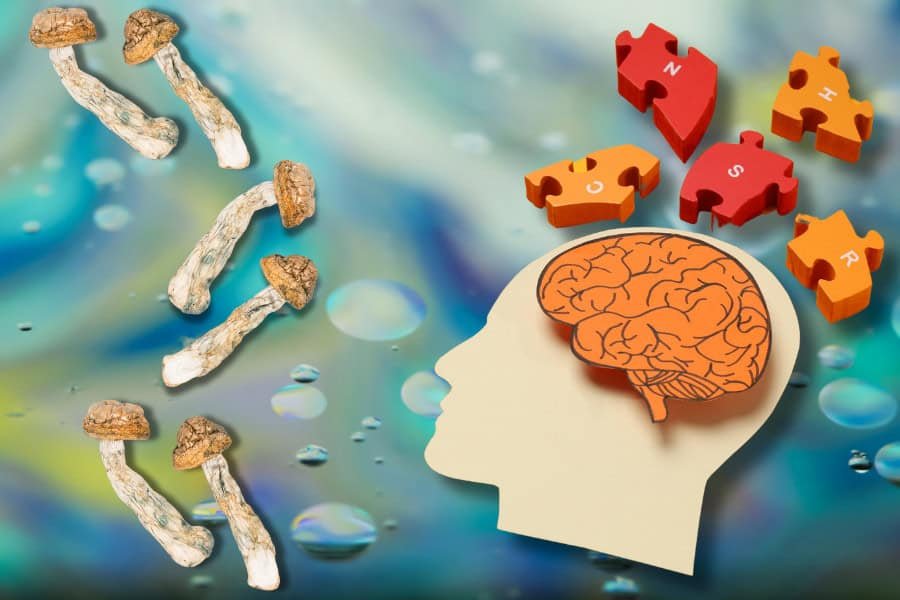
Psychedelics are known to influence cognition in ways that differ from ordinary waking consciousness. When approached intentionally, they may support creative thinking and novel problem-solving rather than distraction or escape. Much of the recent discussion has centered on microdosing as a possible way to explore these effects without entering a full psychedelic state.
Microdosing is often described as subtle rather than dramatic. Advocates suggest it can gently support focus, flexibility, and creative insight, but questions remain about how much of this is supported by research versus personal experience.
What microdosing means
Microdosing refers to taking very small, sub-perceptual amounts of a psychedelic substance. The intention is not to feel intoxicated, but to introduce mild cognitive or emotional shifts that integrate into daily life.
Interest in microdosing has grown in professional and creative communities, where individuals report feeling calmer, more focused, or more reflective. In therapeutic research contexts, low-dose psilocybin has also been explored as a way to support emotional openness and dialogue rather than overwhelming intensity.
Some discussions around microdosing point to gradual improvements in mood and cognition when small doses are combined with structure, reflection, and healthy routines. These effects appear to be cumulative rather than immediate.
How microdosing may influence cognition
The exact biological mechanisms behind microdosing are still being studied, but several theories help explain why people report changes in creativity and problem-solving.
Gentle serotonin modulation that may influence mood and perception
Increased neural flexibility and communication between brain regions
Subtle dopamine activity associated with motivation and focus
Heightened neuroplasticity that supports learning and adaptation
Expectation and mindset effects that shape subjective experience
Because the doses are low, changes tend to feel gradual and contextual rather than dramatic or disruptive.
The default mode network and creative thinking
One way psychedelics may affect problem-solving is through their influence on the brain’s default mode network, often described as a system that filters information and maintains habitual thought patterns.
When this network becomes less dominant, ideas can flow more freely and connections form that might not arise during linear thinking. Even mild modulation, as discussed in microdosing contexts, may support more flexible approaches to complex challenges.
This effect is frequently mentioned in relation to magic mushrooms, which contain psilocybin, a compound known to influence these neural pathways.
Microdosing mushrooms and problem-solving
Psilocybin converts to psilocin in the body and interacts with serotonin receptors associated with perception and cognition. At microdose levels, the goal is not immersion but subtle support for insight and adaptability.
Rather than producing sudden breakthroughs, microdosing is often described as creating favorable conditions for problem-solving over time. Many people follow structured schedules, dosing every few days while journaling, setting intentions, or practicing mindfulness.
Measured formats such as microdose capsules are frequently discussed because they help maintain consistency without daily weighing.
Educational resources often also mention alternatives like psilocybin chocolate as examples of controlled-dose formats, though individual responses still vary.
What about larger doses?
Higher-dose experiences, sometimes called macrodosing, are very different from microdosing. These sessions are typically infrequent and focused on perspective shifts rather than daily productivity.
While larger doses can lead to deep insight, they are not usually approached as problem-solving tools in the conventional sense. Instead, they may change how a problem is understood, with insights unfolding during later reflection rather than in the moment.
Many people find that creative environments, note-taking tools, and integration practices matter more than the dose itself when it comes to applying insights afterward.
 Discreet shipping across Canada
 Same-day GTA delivery · free over $129
 Rated 4.8+ out of 5 by our customers
 Free gift on every $60+ order